
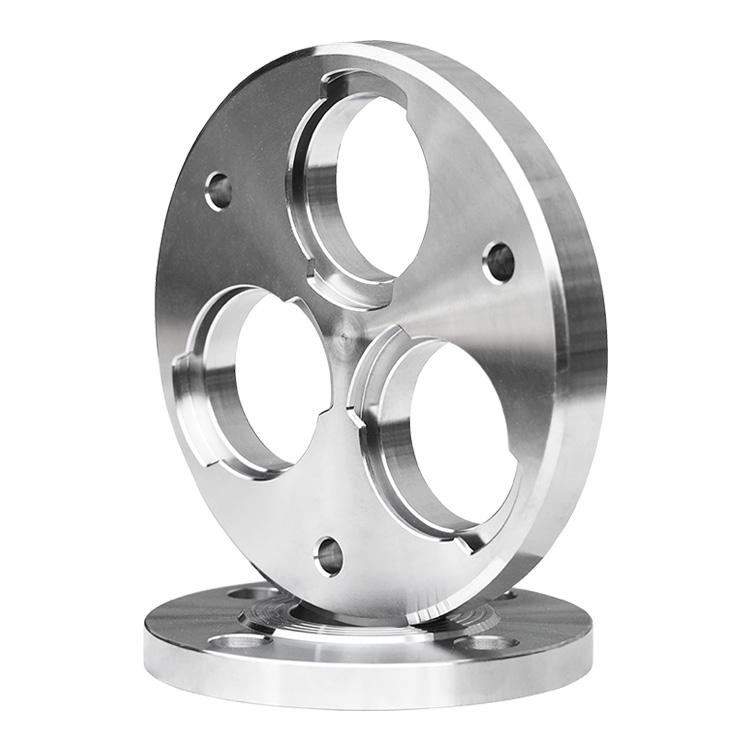
An OEM industrial flange for chemical processing equipment is a precision-engineered connection component designed to join pipes, valves, pumps, vessels, reactors, and other process equipment in demanding chemical environments. In chemical processing plants, flange performance directly affects system integrity, leak prevention, maintenance efficiency, pressure containment, and long-term operational safety. For this reason, OEM industrial flanges are widely used in applications where corrosion resistance, dimensional accuracy, pressure stability, and material consistency are essential.
Chemical processing equipment often operates under aggressive conditions such as high temperature, fluctuating pressure, acidic media, alkaline media, solvent exposure, steam, and abrasive fluids. A properly specified OEM flange helps maintain a secure sealing interface and supports safe operation across a wide range of process conditions. Whether used in batch processing, continuous production lines, storage systems, transfer stations, or utility piping, the OEM industrial flange remains a critical part of the overall mechanical assembly.
This guide provides industry-focused, SEO-friendly information about OEM industrial flanges for chemical processing equipment. It covers definitions, functions, common materials, flange types, sealing methods, manufacturing considerations, quality standards, advantages, selection factors, and specification tables. The content is intended for use in blogs, category pages, industry pages, and technical landing pages.
A flange is a mechanical connector used to join two pieces of piping or equipment. It usually consists of a raised or flat circular ring with bolt holes around the perimeter. When two flanges are bolted together with a gasket or sealing element between them, they form a secure, serviceable joint. In OEM applications, the flange is produced according to the original equipment manufacturer’s design requirements, meaning it is engineered to fit specific equipment dimensions, performance targets, and environmental conditions.
In chemical processing equipment, an OEM industrial flange is not just a standard connection part. It may be customized for pressure class, facing type, bolt pattern, surface finish, corrosion resistance, and dimensional tolerances. OEM flanges are often used in pumps, heat exchangers, mixers, tanks, reactors, filters, columns, skid systems, and process pipelines. The goal is to ensure compatibility, operational reliability, and long service life.
Chemical processing is one of the most demanding industrial environments. Fluids may be toxic, flammable, corrosive, viscous, or highly reactive. A flange failure in such an environment can lead to product loss, shutdowns, environmental incidents, maintenance costs, and safety risks. That is why OEM industrial flanges are designed to provide stable mechanical integrity and dependable sealing in challenging service conditions.
Compared with general-purpose connectors, OEM flanges are developed with a focus on exact fit and application-specific performance. This is especially important when equipment must operate under repeated thermal cycling, aggressive washdown cycles, sterilization, or chemical exposure. For process engineers, procurement teams, and plant maintenance personnel, the right OEM industrial flange can reduce downtime and improve lifecycle value.
OEM industrial flanges are used throughout chemical and allied process industries. Their exact configuration depends on the medium being handled, operating temperature, pressure rating, and the specific equipment design. Common applications include:
Industrial flanges come in a variety of configurations. Selecting the correct flange type is essential for chemical processing equipment because each design offers different installation, sealing, and performance characteristics. Below are the most common flange types used in industrial and chemical service.
| Flange Type | Typical Use | Main Advantages | Common Notes |
|---|---|---|---|
| Weld Neck Flange | High-pressure, high-temperature chemical lines | Excellent strength, smooth stress transfer | Common in critical process systems |
| Slip-On Flange | General-purpose piping and equipment connections | Easy installation, lower cost | Suitable for moderate service conditions |
| Blind Flange | Closing off pipe ends, vessel openings, future access points | Simple sealing, maintenance access | Used for isolation and testing |
| Threaded Flange | Low-welding applications, small-diameter lines | No welding required | More common in non-critical service |
| Lap Joint Flange | Systems requiring frequent disassembly | Easy alignment, low bolt-hole alignment sensitivity | Often used with stub ends |
| Spectacle Blind / Spacer | Isolation and line management | Flexible open/closed positioning | Useful in maintenance procedures |
| Orifice Flange | Flow measurement applications | Supports instrumentation and metering | Used with differential pressure measurement |
| Custom OEM Flange | Specialized equipment interfaces | Application-specific design | May include custom dimensions and facings |
Material selection is one of the most important considerations for an OEM industrial flange for chemical processing equipment. The flange must resist corrosion, maintain mechanical strength, and remain stable under the plant’s operating conditions. The choice of material depends on the chemical medium, temperature range, pressure, cleaning regime, and compliance requirements.
| Material | Typical Strengths | Typical Applications | Selection Consideration |
|---|---|---|---|
| Carbon Steel | Good strength, cost-effective | Non-corrosive or protected service | Needs coating or protection in corrosive environments |
| Stainless Steel 304 | General corrosion resistance, clean finish | Food, water, mild chemical service | Not ideal for highly aggressive chlorides |
| Stainless Steel 316 / 316L | Better corrosion resistance than 304 | Chemical processing, washdown, process piping | Widely used for chemical equipment |
| Duplex Stainless Steel | High strength, improved corrosion resistance | Harsh process media, marine-related chemical systems | Good option for higher stress conditions |
| Alloy Steel | Improved mechanical properties | High-pressure service | May require corrosion protection |
| Nickel Alloys | Excellent resistance in aggressive chemicals | Acid service, highly corrosive processes | Higher cost, used for demanding applications |
| PTFE-Lined / Coated Flanges | Chemical resistance at the surface | Corrosive chemical transfer systems | Useful where direct metal contact is undesirable |
| Special Alloys | Application-specific resistance and durability | Critical OEM equipment | Selected based on exact process media |
OEM industrial flanges are typically specified by nominal pipe size, pressure class, facing type, and material grade. For chemical processing equipment, pressure rating must be matched to the maximum expected operating pressure and temperature. The flange rating system varies by standard, but the basic concept remains the same: a flange must be strong enough to maintain sealing performance under service conditions.
Common size ranges can vary from small-diameter instrumentation connections to large process line connections. In many plants, flange sizes are standardized to simplify maintenance and spare part management. However, OEM equipment may require custom hole patterns, reduced face dimensions, special thicknesses, or non-standard center bores for accurate integration with proprietary machinery.
| Specification Factor | Importance in Chemical Processing | What to Verify |
|---|---|---|
| Nominal Size | Must match piping and equipment interfaces | Pipe diameter, nozzle size, mating part dimensions |
| Pressure Class | Determines pressure containment capability | Operating pressure, test pressure, temperature limits |
| Facing Type | Impacts sealing and gasket compatibility | RF, FF, RTJ, or custom face geometry |
| Thickness | Supports structural strength and durability | Load demands, bolt force, material type |
| Bolt Pattern | Ensures correct assembly and alignment | Hole count, bolt circle diameter, hole size |
| Surface Finish | Affects sealing performance and cleanliness | Roughness, machining quality, coating requirement |
| Temperature Range | Materials and gaskets must remain stable | Maximum and minimum process temperatures |
| Chemical Compatibility | Critical for corrosion resistance | Media composition, cleaning agents, vapor exposure |
The face of an industrial flange plays a major role in sealing performance. In chemical processing equipment, proper facing selection helps reduce leakage risk and improves gasket reliability. The most common flange facing types include:
In many chemical processing applications, the raised face flange is the most common choice because it offers a practical balance of sealing, strength, and compatibility. For more severe operating conditions, RTJ or custom machined facings may be preferred.
A flange alone does not create a seal. The gasket, bolt load, face finish, and alignment all influence the final performance of the joint. In chemical processing equipment, gasket material must be chemically compatible with the process media and capable of withstanding the required temperature and pressure.
Common gasket types used with OEM industrial flanges include sheet gaskets, spiral wound gaskets, PTFE gaskets, graphite gaskets, and metal or semi-metallic sealing elements. Selection should be based on service conditions, assembly practices, and maintenance expectations. Incorrect gasket selection may lead to leaks, compression loss, or premature failure.
| Gasket Type | Key Advantage | Typical Use | Note |
|---|---|---|---|
| PTFE Gasket | Excellent chemical resistance | Corrosive media service | Good choice for aggressive chemicals |
| Graphite Gasket | Good temperature resistance | High-temperature chemical systems | Check compatibility with oxidizing media |
| Spiral Wound Gasket | Reliable for pressure and temperature cycling | Process piping and vessels | Very common in industrial service |
| Sheet Gasket | Cost-effective and versatile | Moderate conditions | Suitable for many general applications |
| Metal Gasket | High sealing integrity | Severe service and high-pressure systems | Requires precise machining and assembly |
OEM industrial flanges offer multiple performance and operational advantages in chemical environments. These benefits make them a preferred choice for equipment manufacturers and plant operators who prioritize reliable connections and long-term system performance.
OEM flanges for chemical processing equipment are typically manufactured using controlled processes that ensure precision and repeatability. Important manufacturing considerations include material traceability, machining quality, heat treatment, dimensional accuracy, surface finish, and inspection procedures. Because chemical service can be unforgiving, consistency matters as much as raw material strength.
Key production steps may include raw material selection, blank cutting, forging or forming, CNC machining, drilling, facing, deburring, surface treatment, and final inspection. For critical applications, ultrasonic testing, hardness testing, dimensional inspection, and chemical composition verification may also be used. These quality controls help ensure the flange performs as intended in the field.
Chemical processing equipment is often governed by industry and regional standards. OEM industrial flanges may need to conform to standard dimensions, pressure classes, material specifications, or testing protocols. While exact requirements depend on the application and location, common standards help ensure interchangeability and safe performance.
| Standard Area | Purpose | Why It Matters |
|---|---|---|
| Dimensional Standards | Define sizes, bolt circles, thickness, and faces | Ensures interchangeability and fit |
| Material Standards | Specify material grades and composition | Supports corrosion and strength requirements |
| Pressure Ratings | Set allowable pressure limits | Important for safe operation |
| Testing Requirements | Validate structural integrity | Reduces defect and failure risk |
| Surface Finish Requirements | Define sealing surface quality | Improves gasket performance |
Choosing the right OEM industrial flange for chemical processing equipment requires a practical review of process conditions, mechanical requirements, and maintenance expectations. The best flange is not always the cheapest or the strongest; it is the one that fits the application most effectively.
The following table presents a general example of the types of specifications commonly reviewed for OEM industrial flanges used in chemical processing equipment. Actual project requirements will vary depending on equipment design and service conditions.
| Specification Item | Typical Options | Technical Meaning |
|---|---|---|
| Nominal Size | Custom / Standard pipe sizes | Matches the mating connection |
| Pressure Class | Low / Medium / High pressure | Defines allowable pressure range |
| Material Grade | Carbon steel, 304, 316L, duplex, alloy | Determines corrosion and strength performance |
| Flange Face | RF, FF, RTJ, custom | Impacts sealing method |
| Surface Finish | Machined, polished, coated | Affects sealing and cleanliness |
| Connection Style | Weld neck, slip-on, blind, threaded, lap joint | Determines installation method |
| Operating Temperature | Ambient to high temperature | Influences material and gasket choice |
| Chemical Resistance | Moderate to severe service | Critical for long-term durability |
| Inspection Level | Visual / dimensional / NDT | Supports product quality assurance |
In industrial procurement, the difference between an OEM flange and a standard flange is important. A standard flange follows commonly accepted dimensions and material grades, making it easy to source and replace. An OEM flange, by contrast, is built to match a specific original equipment design or project requirement. It may include special tolerances, machining details, or surface treatments not commonly found in off-the-shelf components.
Standard flanges are often preferred for general pipe networks, while OEM flanges are more common in specialized process equipment, custom skid systems, and proprietary assemblies. In chemical processing, OEM designs can improve fit and function when standard parts do not fully meet the application requirements.
Custom OEM industrial flanges offer flexibility for unique chemical processing challenges. Some equipment designs require non-standard bolt patterns, compact geometries, enhanced corrosion resistance, or specific sealing profiles. Customization can provide these benefits:
Regular inspection and proper maintenance are essential for keeping OEM industrial flanges in good operating condition. In chemical processing equipment, flange joints should be checked during scheduled shutdowns, preventive maintenance cycles, and after any abnormal operating event.
Chemical processing flanges must handle several common challenges. These include corrosion attack, gasket creep, thermal expansion, vibration, pressure fluctuations, and installation errors. Poor alignment or over-tightening can damage sealing surfaces, while insufficient bolt load may cause leakage. In aggressive environments, even minor material mismatch can lead to premature failure.
To reduce these risks, engineers should evaluate the full operating profile, not just the nominal pressure rating. Chemical concentration, cleaning chemicals, temperature changes, and maintenance frequency all influence flange performance. Good design practices and proper OEM specification can significantly improve reliability.
The following keyword phrases are commonly relevant for SEO content related to this topic:
Before finalizing an OEM flange order or technical drawing, it is useful to confirm the following checklist:
| Checklist Item | Confirmed? | Why It Matters |
|---|---|---|
| Process medium identified | Yes / No | Determines corrosion compatibility |
| Pressure and temperature verified | Yes / No | Ensures correct rating selection |
| Material grade selected | Yes / No | Supports strength and resistance needs |
| Flange type confirmed | Yes / No | Ensures the right connection method |
| Facing and gasket matched | Yes / No | Improves sealing reliability |
| Bolt pattern checked | Yes / No | Prevents assembly issues |
| Surface finish reviewed | Yes / No | Affects seal quality and cleanliness |
| Compliance requirements reviewed | Yes / No | Supports project approval and safety |
An OEM industrial flange for chemical processing equipment is a vital component that supports safe, reliable, and efficient process operation. From material selection and flange type to gasket compatibility and dimensional accuracy, every detail affects performance in chemical service. OEM flanges are especially valuable where standard parts do not provide the exact fit, corrosion resistance, or mechanical reliability required by the application.
For chemical plants, OEM process skids, reactors, tanks, and transfer systems, a well-specified industrial flange can help minimize leaks, improve maintainability, and extend equipment life. By focusing on correct specifications, compatible materials, and quality manufacturing, engineers and buyers can make better decisions for long-term operational success.
```
If you want, I can also provide:
1. a more keyword-optimized version for faster SEO indexing,
2. a FAQ schema-style section for the same topic, or
3. a version with H1/H2/H3 structure and meta title/meta description.


著作権 © 2022 浙江松林フランジ株式会社
サイトマップこの Web サイトでは、お客様に最高のエクスペリエンスを提供するために Cookie を使用しています。

 English
 Español
 Pусский
 Français
 Deutsch
 한국어
한국어 العربية
 Italiano
 Nederlands



 ワッツアップ
 電話
電話
コメント
(0)