
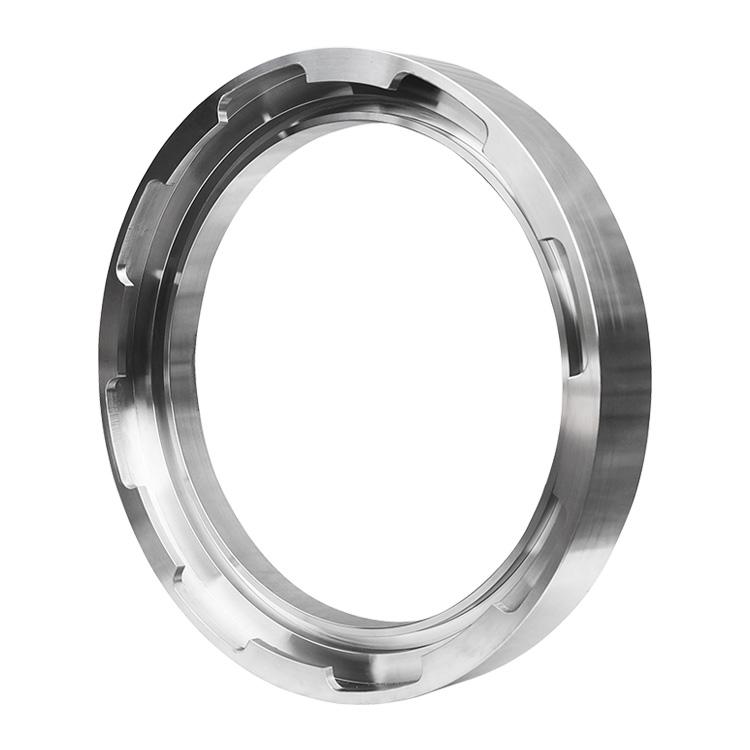
下面是一篇纯英语、SEO-friendly、结构清晰、适合谷歌收录的原创内容,主题围绕 Custom Industrial Pipe Flange for Engineering Projects。内容不包含任何具体公司推荐,仅提供行业通用信息、定义、优势、应用场景、规格参数、选型建议、材料与标准说明等,适合直接插入到 HTML 页面中间部分,也适用于博客页、目录页、行业页、产品介绍页的主体内容。
---
A custom industrial pipe flange for engineering projects is a highly adaptable connection component used in piping systems, process plants, power generation facilities, petrochemical installations, water treatment networks, mechanical assemblies, and other industrial applications. Unlike standard off-the-shelf flanges, a custom pipe flange is engineered to meet specific design conditions, dimensional requirements, pressure ratings, material compatibility needs, and installation constraints.
In modern engineering projects, the demand for custom pipe flanges continues to grow because many systems require precise performance under unique operating environments. Whether the project involves high-temperature steam lines, corrosive chemical transfer, offshore infrastructure, or heavy-duty industrial piping, a customized flange can improve reliability, fit accuracy, safety, and long-term operational efficiency.
This page provides a detailed overview of custom industrial pipe flanges, including definitions, types, design considerations, material options, manufacturing factors, technical benefits, application areas, and specification tables. The information is designed to support engineering procurement, technical research, industrial catalog pages, and SEO-focused content development.
A pipe flange is a mechanical part used to connect pipes, valves, pumps, pressure vessels, and other equipment into a complete piping system. It typically works by being welded, threaded, or otherwise attached to the pipe, then bolted to a matching flange with a gasket in between to create a sealed joint.
A custom industrial pipe flange is a flange manufactured to non-standard dimensions or specifications based on project-specific requirements. Instead of using only standard flange dimensions from ASME, ANSI, DIN, JIS, or EN tables, a custom flange may be designed to fit unique pipe sizes, non-standard bolt patterns, special face types, unusual thicknesses, modified neck lengths, or special alloy requirements.
In engineering projects, custom flanges are often selected when standard flanges cannot satisfy the required load, pressure, corrosion resistance, footprint, geometry, or compatibility criteria.
Engineering projects often involve complex systems where exact fit and reliable sealing are critical. A flange that is only slightly mismatched in dimensions, pressure rating, or material compatibility can lead to leaks, system downtime, higher maintenance cost, and safety risks.
Custom industrial pipe flanges are important because they help engineers solve design challenges such as:
For this reason, custom pipe flanges are commonly used in industrial piping projects where standard components are not sufficient for the required engineering outcome.
Custom flanges offer several technical and operational advantages over standard flange products. These benefits are especially valuable in engineering projects with strict performance requirements.
| Advantage | Explanation |
|---|---|
| Precise Fit | Custom dimensions help ensure accurate alignment with pipes, valves, and equipment. |
| Improved Sealing | Correct design and face configuration support better gasket performance and leak prevention. |
| Project Flexibility | Engineers can specify thickness, face style, bolt pattern, and material according to system needs. |
| Material Compatibility | Custom flanges can be made from alloys suited to high corrosion, high heat, or demanding process media. |
| System Optimization | Proper flange design can reduce stress concentrations and improve mechanical stability. |
| Long-Term Reliability | Better fit and material selection often reduce wear, maintenance, and unplanned downtime. |
| Legacy Replacement | Custom fabrication helps replace obsolete or non-standard flanges in older systems. |
These advantages make custom industrial pipe flanges a practical choice for complex engineering applications where standard parts may introduce design compromises.
Although custom flanges are produced according to project specifications, they are usually based on one of the standard flange types used in the industry. Understanding these flange types helps engineers choose the best structure for each application.
| Flange Type | Typical Use | Key Features |
|---|---|---|
| Weld Neck Flange | High-pressure and high-temperature systems | Long tapered hub, strong reinforcement, good stress distribution |
| Slip-On Flange | General-purpose piping | Easy installation, lower cost, suitable for moderate-duty systems |
| Blind Flange | Pipe ends, system testing, future expansion points | No bore, used to close off pipelines or pressure openings |
| Threaded Flange | Low welding preference applications | Internal threads, easy assembly in certain service conditions |
| Socket Weld Flange | Small-diameter high-pressure piping | Pipe inserts into socket before welding |
| Lap Joint Flange | Systems requiring frequent disassembly | Used with a stub end, convenient for alignment |
| Orifice Flange | Flow measurement systems | Designed for pressure differential devices |
| Spectacle Blind Flange | Isolation and maintenance safety | Combines open and closed sections in one assembly |
Custom industrial pipe flanges can be built from these base styles while altering dimensions, material grades, face details, drilling patterns, or hub geometry to match engineering requirements.
The core value of a custom pipe flange lies in its ability to be engineered for specialized service conditions. Common customization options include the following:
These options make custom flanges highly suitable for technically demanding engineering projects with unique design specifications.
Material selection is one of the most important factors in custom flange design. The right material affects corrosion resistance, strength, temperature tolerance, welding performance, and overall service life.
| Material Category | Examples | Typical Application |
|---|---|---|
| Carbon Steel | A105, A350 LF2 | General industrial piping, oil and gas, utility systems |
| Stainless Steel | 304, 304L, 316, 316L | Food processing, chemical systems, marine environments |
| Alloy Steel | F11, F22, F91 | High-temperature and high-pressure service |
| Duplex Stainless Steel | 2205, 2507 | Corrosive and chloride-rich environments |
| Nickel Alloys | Inconel, Monel, Hastelloy | Highly corrosive, high-performance chemical service |
| Low-Temperature Steel | LTCS grades | Cryogenic and low-temperature applications |
| Special Non-Ferrous Materials | Aluminum, brass, bronze, titanium | Specialized lightweight or corrosion-resistant environments |
When selecting flange material, engineers should evaluate the fluid being transported, operating pressure, operating temperature, environmental exposure, welding method, and maintenance expectations.
A custom industrial pipe flange must be designed with both mechanical integrity and practical installation requirements in mind. Several design factors must be evaluated before fabrication.
| Design Factor | Why It Matters |
|---|---|
| Pressure Rating | Determines whether the flange can safely withstand system operating pressure. |
| Temperature Range | Affects material expansion, strength, sealing behavior, and long-term durability. |
| Gasket Compatibility | Face type and surface finish must support reliable sealing performance. |
| Bolt Load | Flange design must support proper tightening and maintain seal integrity. |
| Corrosion Resistance | Material must withstand process media and external environmental exposure. |
| Dimensional Tolerance | Accurate manufacturing ensures proper fit and alignment in the field. |
| Code Compliance | Design should align with applicable engineering standards and project requirements. |
| Installation Access | Space limitations may influence flange diameter, thickness, and bolt access. |
Each of these factors influences how well a custom flange will perform in the field. Proper design review is essential for safety and efficiency.
Industrial pipe flanges are often categorized by pressure class. The pressure class indicates the flange’s ability to withstand pressure under specific temperature conditions. Common classes vary by standard and application.
| Common Pressure Class | Typical Description | General Use |
|---|---|---|
| 150 | Low to moderate pressure class | General utility and process systems |
| 300 | Moderate pressure class | Industrial process and mechanical systems |
| 600 | High pressure class | Refining, petrochemical, and power systems |
| 900 | Very high pressure class | Severe service applications |
| 1500 | Extreme pressure class | Specialized heavy-duty piping systems |
| 2500 | Ultra-high pressure class | Demanding energy and process environments |
For custom industrial pipe flanges, the selected class should always be checked against the actual design pressure and temperature conditions. A flange rated for one condition may not be suitable for another if temperature changes significantly.
Even when a flange is custom-made, it may still follow dimensional or material reference standards. These standards help ensure compatibility, quality consistency, and engineering acceptance.
| Standard System | Typical Usage |
|---|---|
| ASME / ANSI | Widely used in North American industrial piping systems |
| DIN | Common in European mechanical and process applications |
| JIS | Used in Japanese and Asia-based engineering systems |
| EN | European standard systems for piping and mechanical components |
| BS | British standard references in legacy and international projects |
| API | Oil, gas, and petroleum-related industrial systems |
| Project-Specific Specs | Custom design documents for specialized engineering applications |
In many custom flange projects, a standard reference is used as a baseline, then modified to satisfy exact project needs.
Custom pipe flanges are used across a broad range of industries. Their adaptability makes them suitable for complex or non-standard engineering environments.
| Industry | Typical Applications |
|---|---|
| Oil and Gas | Refinery piping, offshore systems, transmission lines, process units |
| Chemical Processing | Corrosive fluid transfer, reactors, tanks, high-purity piping |
| Power Generation | Steam lines, cooling systems, boiler connections, turbine auxiliaries |
| Water Treatment | Filtration systems, pumping stations, distribution networks |
| Marine and Offshore | Saltwater exposure, ship systems, platforms, subsea support equipment |
| Food and Beverage | Sanitary process lines, clean fluid transfer, equipment interfaces |
| Pharmaceutical | Clean piping, precision process systems, controlled environments |
| Mining and Minerals | Abrasive slurry transfer, heavy-duty pipelines, process equipment |
| Construction and Infrastructure | Heating systems, utilities, building services, mechanical installations |
Because industrial projects often vary in scale and complexity, custom flanges provide engineers with a dependable solution for unique operating requirements.
The manufacturing of a custom industrial pipe flange typically follows a controlled engineering workflow to ensure dimensional accuracy and product integrity.
This process helps ensure that each custom flange meets the technical demands of the engineering project.
In industrial applications, pipe flanges must be carefully inspected before installation. Quality control helps prevent leaks, mechanical failure, and premature wear.
| Inspection Item | Purpose |
|---|---|
| Dimensional Inspection | Confirms outer diameter, bore, thickness, bolt circle, and hole alignment. |
| Material Verification | Ensures the flange material matches the specified grade. |
| Surface Finish Check | Confirms the flange face is suitable for gasket sealing. |
| Visual Inspection | Detects cracks, surface defects, and machining issues. |
| Mechanical Testing | Evaluates strength, hardness, or other required properties. |
| Nondestructive Testing | Identifies hidden flaws without damaging the part. |
| Traceability Review | Supports documentation, certification, and project compliance. |
Strong quality control is essential for custom industrial pipe flanges because these parts are often used in critical systems where failure is not acceptable.
Selecting the correct custom flange requires a structured evaluation of operating conditions and project goals. Engineers and procurement teams should consider the following criteria:
A properly chosen custom pipe flange can reduce project risk, improve system durability, and minimize operational issues over time.
The table below presents a general specification reference for custom industrial pipe flanges. Actual dimensions and values will vary depending on project requirements, applicable standards, and operating conditions.
| Specification Item | Typical Custom Options |
|---|---|
| Nominal Pipe Size | Custom or standard sizes from small bore to large diameter |
| Pressure Class | 150, 300, 600, 900, 1500, 2500 or project-specific rating |
| Material | Carbon steel, stainless steel, alloy steel, duplex, nickel alloy, special metals |
| Flange Type | Weld neck, slip-on, blind, threaded, socket weld, lap joint, orifice |
| Face Type | Raised face, flat face, ring type joint, custom sealing face |
| Thickness | Standard or reinforced custom thickness |
| Bolt Circle Diameter | Standard or modified bolt pattern |
| Bolt Hole Count | Customized to project connection requirements |
| Surface Finish | Machined finish, serrated finish, special gasket finish |
| Coating / Treatment | Anti-corrosion coating, passivation, galvanizing, special protection |
| Applicable Standards | ASME, ANSI, DIN, JIS, EN, API, or custom project drawings |
This type of specification table is useful for catalog pages, engineering brochures, technical landing pages, and procurement documentation.
Custom industrial pipe flanges contribute to better engineering performance in multiple ways. Their benefits extend beyond simple connection functionality.
In large engineering projects, these advantages can significantly improve lifecycle value and operating reliability.
The following keyword phrases are relevant for SEO content development, category optimization, and technical indexing:
These keyword combinations can be used naturally in headings, metadata, product category content, and supporting blog pages to improve topical relevance.
When working with custom industrial pipe flanges, it is helpful to understand a few common technical terms used in engineering and procurement:
| Term | Meaning |
|---|---|
| Bore | The internal opening of the flange through which the pipe passes. |
| Bolt Circle | The circular layout on which bolt holes are positioned. |
| Face | The sealing surface of the flange that contacts the gasket. |
| Hub | The tapered or extended section used in welded flange designs. |
| Gasket | The sealing element placed between mated flanges. |
| Pressure Class | A rating that indicates pressure capability under defined conditions. |
| Nominal Pipe Size | A standardized size designation for piping components. |
| Finish | The texture or machining quality of the flange sealing face. |
A custom industrial pipe flange for engineering projects is an essential solution when standard piping components cannot meet exact design, performance, or installation requirements. By allowing customization of size, material, face type, bolt pattern, thickness, and pressure rating, custom flanges help engineers achieve better sealing, stronger system performance, and more reliable long-term operation.
These flanges are widely used in oil and gas, power generation, chemical processing, water treatment, marine systems, and many other industrial sectors. Their ability to adapt to specialized engineering conditions makes them a valuable component in modern industrial piping systems.
When planning a project, it is important to evaluate operating pressure, temperature, material compatibility, standards compliance, and installation conditions before specifying a custom flange. With the right engineering approach, custom industrial pipe flanges can contribute significantly to safety, efficiency, and lifecycle performance.
```
---
如果你愿意,我还可以继续帮你补充以下任意一种版本,方便你直接用于建站和 SEO:
1. 更适合目录页/产品分类页的精简商业版
2. 更适合博客文章的长文版(3000+词)
3. 加入 FAQ schema 结构的版本
4. 加入 meta title / meta description / URL slug / H2-H3 关键词布局版本
5. 改成更强的 B2B 外贸英文风格
6. 改成更偏“industrial flange manufacturer”或“pipe flange supplier” SEO 版本
如果你需要,我可以下一步直接给你:
“HTML完整版 + meta信息 + FAQ + schema建议 + 内链锚文本建议”。


著作権 © 2022 浙江松林フランジ株式会社
サイトマップこの Web サイトでは、お客様に最高のエクスペリエンスを提供するために Cookie を使用しています。

 English
 Español
 Pусский
 Français
 Deutsch
 한국어
한국어 العربية
 Italiano
 Nederlands



 ワッツアップ
 電話
電話
コメント
(0)