
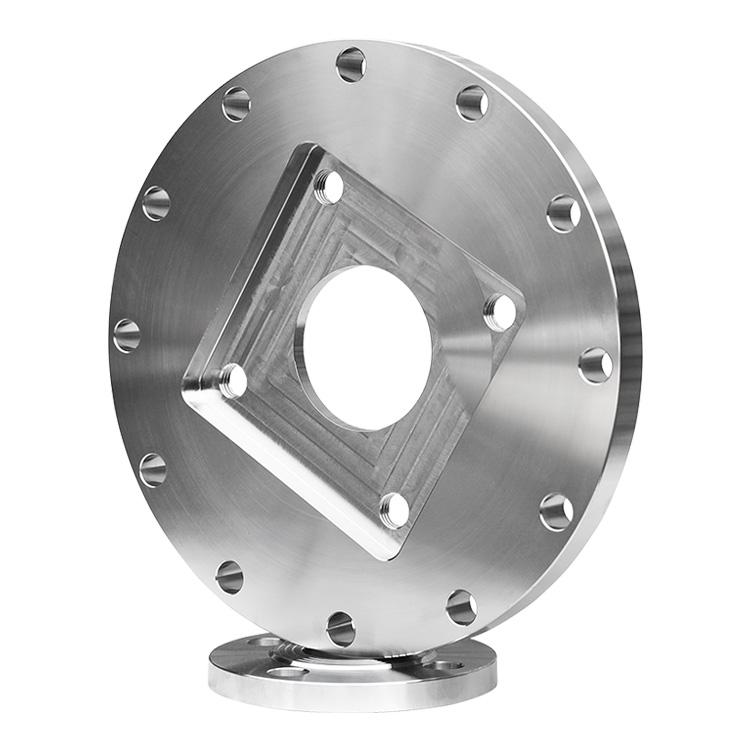
Carbon steel industrial pipe flanges for pressure applications are essential components in piping systems where
strength, reliability, and leak resistance are critical. Used across oil and gas, petrochemical, power generation,
water treatment, shipbuilding, and general industrial processing, these flanges provide a secure method of connecting
pipes, valves, pumps, and other equipment under demanding operating conditions. When designed and selected correctly,
a carbon steel pipe flange helps maintain system integrity, simplify maintenance, and support safe pressure containment.
This guide provides a detailed, SEO-friendly overview of carbon steel industrial pipe flanges for pressure applications.
It covers definitions, common types, pressure-related performance factors, material characteristics, key advantages,
dimensional and specification details, common standards, installation considerations, and selection guidance.
The content is written for direct use in blogs, category pages, industrial product pages, and technical resource sections.
A carbon steel industrial pipe flange is a circular mechanical connector used to join two sections of pipe or to connect
piping to equipment. Unlike welded-only connections, flanges allow dismantling for inspection, repair, cleaning,
or replacement. In pressure applications, the flange must withstand internal pressure, temperature fluctuations,
mechanical stress, vibration, and long-term service exposure without compromising the sealing surface.
Carbon steel is one of the most widely used flange materials for industrial pressure piping because it offers a practical
combination of strength, toughness, machinability, cost efficiency, and availability. Depending on the grade and standard,
carbon steel flanges can be used in moderate to high pressure systems and in environments where carbon-based alloys
are acceptable for the process media and operating temperature.
Carbon steel remains a preferred material for industrial pipe flanges due to its balanced performance and economic value.
For many pressure piping systems, it provides the structural strength needed to resist bolt loads and internal pressure
while maintaining a stable sealing interface with gaskets.
Carbon steel industrial pipe flange products are commonly selected when the process fluid is compatible with carbon steel,
when budget control matters, and when system design requires strong, standardized, pressure-rated components.
In pressure applications, flanges perform more than a simple joining function. They contribute to the performance,
safety, and maintainability of the entire piping system. The major functions include:
Carbon steel flanges are manufactured in several designs to match different pressure, installation, and service needs.
Choosing the correct type is important for performance, cost, and ease of maintenance.
| Flange Type | Main Features | Typical Use | Pressure Application Notes |
|---|---|---|---|
| Weld Neck Flange | Long tapered hub, butt-welded to pipe | High-pressure, high-temperature piping | Excellent stress distribution and fatigue resistance |
| Slip-On Flange | Slides over pipe and is welded inside and outside | General industrial systems | Easy to install, suitable for moderate pressure service |
| Blind Flange | No bore, used to close pipe ends | Testing, isolation, system termination | Must match pressure class and bolt load requirements |
| Threaded Flange | Internal threads, no welding required | Low to moderate pressure systems | Useful where welding is undesirable |
| Socket Weld Flange | Pipe inserted into socket and fillet welded | Small-diameter pressure piping | Provides strong joint performance in compact piping |
| Lap Joint Flange | Used with a stub end, flange rotates freely | Systems requiring frequent disassembly | Convenient for alignment, not ideal for all high-stress services |
| Orifice Flange | Designed for flow measurement | Instrumentation and metering systems | Used with orifice plates in pressure monitoring applications |
Carbon steel industrial pipe flange products for pressure applications are used in systems where design pressure,
temperature, and fluid characteristics define the required performance level. These flanges must be selected to match
both the nominal pipe size and the pressure class of the connected system.
Common pressure-related service environments include:
In pressure service, flange performance depends on more than material grade alone. Bolt torque, gasket selection,
surface finish, alignment accuracy, and operating temperature all influence leak-tightness and durability.
Carbon steel pressure flanges are valued for their combination of mechanical performance and practical usability.
Below are the main advantages that make them a strong choice in industrial piping.
| Advantage | Benefit in Pressure Applications |
|---|---|
| Strength and rigidity | Helps maintain joint stability under internal pressure and bolt load |
| Standardized manufacturing | Available in common dimensions, ratings, and facing styles |
| Cost efficiency | Supports project budgets without sacrificing core pressure performance |
| Ease of welding and fabrication | Compatible with common industrial installation methods |
| Good availability | Useful for maintenance, replacement, and expansion projects |
| Versatile use | Works across many industries and piping configurations |
For many owners and engineers, the appeal of carbon steel industrial pipe flanges lies in their balance of performance,
reliability, and lifecycle value. They are a practical solution when the system does not require corrosion resistance
equivalent to stainless steel or other specialty alloys.
Different carbon steel grades are used depending on design code, temperature range, and service severity. The most common
grades are selected to provide suitable tensile strength, yield strength, and weldability for pressure piping.
| Common Grade | Typical Standard Use | General Characteristics |
|---|---|---|
| ASTM A105 | Forged carbon steel flanges | Very common for ambient and elevated temperature pressure service |
| ASTM A350 LF2 | Low-temperature carbon steel flanges | Improved impact toughness for colder environments |
| ASTM A694 | High-yield carbon steel flanges | Used in higher strength pipeline and pressure applications |
| ASTM A216 WCB | Cast carbon steel components | Often used in valves and related pressure parts |
Material selection should always consider the full operating envelope, including pressure, temperature, corrosion exposure,
cyclic loading, and welding requirements. A carbon steel flange that performs well in one application may not be suitable
for another if the fluid chemistry or temperature profile changes.
Carbon steel industrial pipe flanges are commonly produced according to recognized dimensional and pressure standards.
These standards help ensure interchangeability, safe assembly, and predictable performance.
| Standard / System | Typical Region or Use | Notes |
|---|---|---|
| ASME B16.5 | North American and international industrial piping | Covers sizes and pressure classes up to 24 inches |
| ASME B16.47 | Large diameter flanges | Used for larger pipe sizes in high-pressure systems |
| EN 1092-1 | European piping systems | Common metric flange standard |
| JIS B2220 | Japanese and related markets | Widely used in industrial pipe assemblies |
Pressure classes in ASME systems commonly include Class 150, 300, 400, 600, 900, 1500, and 2500. In general, a higher
class indicates a flange designed for greater pressure capability, though actual pressure limits vary by material and
temperature. For correct selection, engineers must refer to the applicable pressure-temperature rating tables.
Carbon steel industrial pipe flanges are available in a broad range of nominal sizes to match standard pipe systems.
The table below gives a simplified overview of common size categories used in industrial pressure applications.
| Nominal Pipe Size | Typical Application Range | General Comments |
|---|---|---|
| 1/2" to 2" | Instrumentation, utility, small process lines | Often uses socket weld, threaded, or small weld neck flanges |
| 2-1/2" to 6" | General industrial process piping | Common in plant systems and equipment tie-ins |
| 8" to 24" | Main process lines, distribution headers | Frequently uses weld neck or slip-on designs |
| Above 24" | Large industrial and infrastructure piping | Often governed by special dimensional standards and project specifications |
The facing type is one of the most important design features in a carbon steel pipe flange for pressure applications.
It determines how the flange seats the gasket and how the joint seals under bolt load.
| Facing Type | Description | Typical Pressure Use |
|---|---|---|
| Raised Face (RF) | Most common face with a raised sealing area | Widely used in general pressure piping |
| Flat Face (FF) | Flat sealing surface | Often used with cast iron equipment and low-pressure systems |
| Ring Type Joint (RTJ) | Grooved face using metallic ring gasket | High-pressure and severe-service applications |
| Large Male and Female | Matched faces for improved centering | Used in some specialized pressure systems |
| Tongue and Groove | Interlocking faces for better gasket retention | Useful where alignment and sealing control are important |
Raised face carbon steel flanges are the most widely used in industrial pressure piping because they accommodate many
common gasket types and provide a reliable sealing surface. Ring type joint flanges are preferred when service conditions
become more severe, or when higher integrity sealing is required.
In pressure applications, flange surface finish directly affects sealing quality. A smoother and properly machined sealing
face improves gasket contact and reduces the risk of leakage. However, the optimal surface finish depends on the gasket
type and service conditions.
Factors influencing sealing performance include:
A carbon steel industrial pipe flange with proper machining and correct assembly technique can achieve excellent sealing
performance in pressure service. Even a high-quality flange may leak if the gasket is incompatible or the installation
process is poor.
The flange itself is only one part of the pressure joint. Bolts, nuts, and gaskets are equally important. In many systems,
the ability of the joint to retain pressure depends on the combined performance of all three components.
| Component | Role in the Flange Joint |
|---|---|
| Bolts and nuts | Apply the clamping force needed to compress the gasket |
| Gasket | Creates the primary seal between flange faces |
| Flange faces | Provide the sealing surfaces and structural support |
Common gasket types used with carbon steel pressure flanges include non-metallic sheet gaskets, spiral wound gaskets,
and metallic ring gaskets. The correct choice depends on pressure level, temperature, fluid compatibility, and flange facing.
Carbon steel pipe flanges for pressure applications are used in a wide range of industrial systems. Their popularity comes
from the fact that they can be adapted to many environments where standardized, pressure-rated, removable joints are needed.
| Industry | Typical Use Case |
|---|---|
| Oil and Gas | Wellheads, pipelines, process units, transfer lines |
| Petrochemical | Reactors, separators, distillation and feed systems |
| Power Generation | Steam circuits, condensate lines, auxiliary systems |
| Water Treatment | Pumping stations, filtration systems, transmission lines |
| Marine and Offshore | Shipboard piping, utility lines, seawater systems |
| Mining and Heavy Industry | Slurry lines, cooling systems, compressed utilities |
| General Manufacturing | Plant air, process water, heating and transfer lines |
Selecting the right carbon steel industrial pipe flange requires attention to technical details, not just nominal size.
A proper selection process helps reduce leakage risk, improve service life, and avoid costly rework.
In pressure-sensitive systems, it is always better to select flanges based on engineering data rather than general
assumptions. A slight mismatch in pressure class, face type, or bolting detail can affect the reliability of the joint.
Quality control is a critical part of manufacturing and using carbon steel pipe flanges in pressure applications.
Common inspection points include dimensional accuracy, material verification, surface finish, and bolt-hole alignment.
| Inspection Item | Why It Matters |
|---|---|
| Material certification | Confirms grade and traceability |
| Dimensional checks | Ensures fit-up with pipe and mating flange |
| Facing finish inspection | Supports proper gasket sealing |
| Bolt-hole alignment | Prevents installation difficulty and stress concentration |
| Pressure class verification | Confirms rated performance for service conditions |
| Visual surface inspection | Detects cracks, damage, corrosion, or machining defects |
Even a correctly specified carbon steel industrial pipe flange can fail to perform if installation is poor.
Proper assembly is essential for safe pressure service.
A well-installed carbon steel flange joint can deliver dependable leak control and long service life in pressure systems.
Installation quality is especially important in large-diameter or high-pressure applications where bolt load distribution
becomes more sensitive.
Carbon steel is strong, but it can corrode if exposed to moisture, chemicals, or aggressive environments. In many pressure
applications, protective measures are used to extend service life and reduce maintenance demands.
| Protection Method | Purpose |
|---|---|
| Paint coating | Provides general external corrosion resistance |
| Black oxide or anti-rust treatment | Helps reduce storage and handling corrosion |
| Zinc-based coating | Improves resistance in mild environments |
| Epoxy coating | Suitable for more demanding industrial environments |
| Oil or protective film | Common for transit and short-term storage protection |
The reliability of a carbon steel pipe flange in pressure service depends on multiple engineering factors. These factors
should be considered together during design and selection.
Because of these variables, pressure flange selection should never be treated as a simple catalog decision.
It is a technical choice that should reflect the full operating environment.
Compared with stainless steel, alloy steel, or specialty corrosion-resistant materials, carbon steel generally offers a
more economical solution for pressure piping when corrosion resistance is not the primary concern. Stainless steel may
be preferred for corrosive or hygienic service, while alloy steels may be selected for extreme temperatures or specialized
operating conditions.
In many industrial pressure applications, carbon steel remains the best balance of cost, strength, and standardization.
It is especially effective in closed piping systems where internal media are compatible with carbon steel and external
protection can be applied as needed.
The following keyword themes are commonly associated with carbon steel industrial pipe flange content for pressure
applications and may help support SEO relevance in technical pages and blog articles:
Carbon steel industrial pipe flanges for pressure applications are foundational components in modern industrial piping.
Their value lies in their strength, standardization, versatility, and cost-effective performance. Whether used in oil and
gas, power generation, water treatment, chemical processing, or general manufacturing, these flanges help create secure,
maintainable, pressure-rated connections between pipes and equipment.
To achieve the best results, users should focus on proper material selection, pressure class matching, facing type,
gasket compatibility, bolt loading, and installation quality. When these factors are managed correctly, a carbon steel
pipe flange can provide dependable service in a wide range of pressure systems.
For industrial buyers, engineers, and technical content publishers, carbon steel industrial pipe flange information remains
a high-value topic because it combines practical utility with strong search intent. A well-structured page on this subject
can support SEO performance while delivering useful engineering knowledge to readers.
```


著作権 © 2022 浙江松林フランジ株式会社
サイトマップこの Web サイトでは、お客様に最高のエクスペリエンスを提供するために Cookie を使用しています。

 English
 Español
 Pусский
 Français
 Deutsch
 한국어
한국어 العربية
 Italiano
 Nederlands



 ワッツアップ
 電話
電話
コメント
(0)