
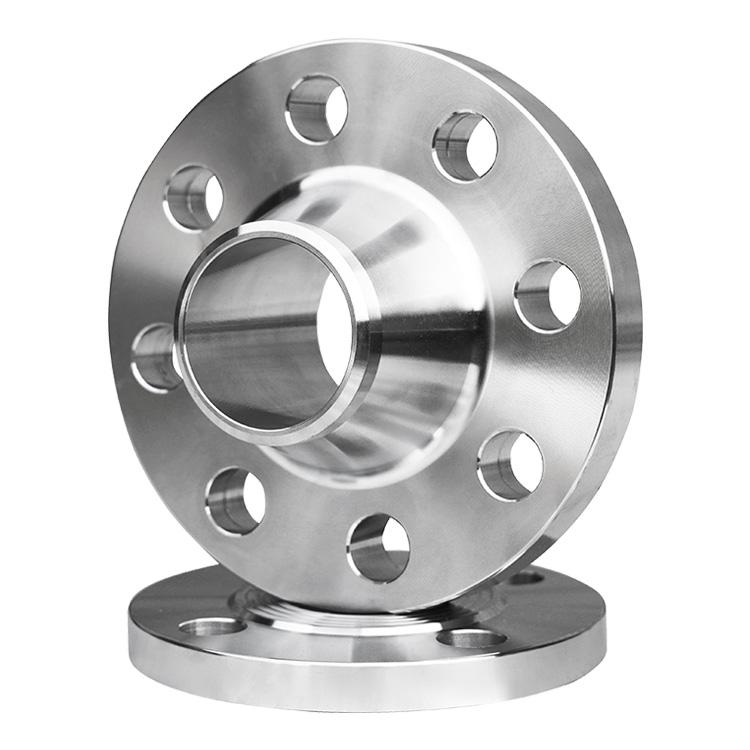
A Heavy Duty Welding Neck Flange for Pipeline Construction is a high-strength pipe flange designed to connect
pipelines, valves, pressure equipment, and related components in demanding industrial environments. In pipeline construction,
this type of flange is widely valued for its excellent mechanical strength, stable pressure handling,
and long-term sealing performance. Because the neck and hub are integrally forged and the weld connection
transfers stress smoothly into the pipe wall, the welding neck flange is often selected for applications where safety, durability,
and resistance to vibration, pressure fluctuation, and thermal stress are critical.
For engineers, procurement teams, and project planners, choosing the right heavy duty welding neck flange is
an important part of ensuring pipeline integrity. These flanges are commonly used in oil and gas pipelines, petrochemical systems,
offshore installations, power plants, water treatment facilities, and high-pressure industrial piping networks. They are especially
suitable for systems that require strong weldability, precise alignment, and reliable leak prevention over long service cycles.
This page provides a complete industry-focused overview of the heavy duty welding neck flange, including its definition,
structural features, main advantages, standard specifications, material options, face types, pressure classes, and common pipeline
construction applications. The content is written in SEO-friendly English and designed for direct use in blog posts, category pages,
product introduction pages, and industrial knowledge pages.
A welding neck flange is a flange with a long tapered hub that is butt-welded to a pipe. The tapered hub provides
a gradual transition from flange thickness to pipe wall thickness, which helps reduce stress concentration at the weld joint.
When the flange is manufactured in a heavy duty version, it generally features a thicker body, stronger hub design,
higher load-bearing capacity, and improved resistance to extreme pressure and harsh operating conditions.
In pipeline construction, the term heavy duty welding neck flange usually refers to a flange engineered for
challenging environments where standard flanges may not provide enough mechanical strength or fatigue resistance. It is commonly
used in critical service lines, high-pressure transmission pipelines, steam systems, chemical process piping, and large-diameter
industrial lines.
The flange is attached to the pipe by a butt weld, which creates a strong and permanent joint. This connection method is preferred
in applications where long-term reliability is more important than frequent disassembly. Compared with slip-on flanges, the welding
neck flange offers better stress distribution, making it one of the most trusted flange types in pipeline construction.
Pipeline systems often operate under severe conditions. They may experience high internal pressure, temperature changes, vibration,
external loads, ground movement, and corrosive media. In such conditions, the flange joint must remain stable and leak-resistant.
A heavy duty welding neck flange for pipeline construction is designed specifically to meet these demands.
The importance of this flange type comes from its ability to provide:
These characteristics make heavy duty welding neck flanges a preferred choice in systems where downtime, leakage, and joint failure
can lead to expensive maintenance, production interruption, or safety risks.
The performance of a heavy duty welding neck flange comes from its structural design. Each feature contributes to overall strength
and reliability in pipeline construction.
The long tapered hub is one of the defining features of the welding neck flange. This shape allows stress to move gradually from
the flange body into the pipe, reducing stress concentration at the weld area. In heavy duty applications, this feature is especially
valuable because it supports stability under high loads and pressure.
The flange is joined to the pipe using a butt weld. This creates a strong, continuous connection that is suitable for high-integrity
systems. The butt-weld method also allows better alignment and improves overall pipeline strength compared with some other flange
types.
Heavy duty versions usually have a thicker face and body, enabling them to handle higher pressure classes and stronger external forces.
This added thickness is particularly useful in large-diameter pipelines and severe service environments.
Standardized bolt holes ensure proper mating with matching flanges. Precision in bolt hole placement is essential for even load
distribution, accurate gasket compression, and dependable sealing.
Heavy duty welding neck flanges are available with different face finishes, including raised face, flat face, and ring-type joint.
The selected face type depends on pressure class, gasket material, and pipeline design requirements.
A heavy duty welding neck flange offers several advantages that make it ideal for pipeline construction and industrial piping
systems. Below are the most important benefits.
The heavy duty design increases the flange’s ability to resist bending, axial loading, and internal pressure. This makes it suitable
for demanding pipeline networks where mechanical stability is essential.
Welding neck flanges are commonly used in high-pressure service because the stress is distributed efficiently through the hub and
weld. Heavy duty models are even more effective in extreme pressure conditions.
In pipelines exposed to pressure cycling, vibration, or thermal expansion and contraction, fatigue resistance is crucial. The smooth
transition of the hub helps reduce repeated stress damage over time.
When paired with the correct gasket and bolt torque, heavy duty welding neck flanges deliver excellent sealing performance. This
is important in systems transporting gas, steam, chemicals, or other hazardous fluids.
Because of their sturdy structure and strong connection method, these flanges are built for long-term use. They are widely chosen
for infrastructure where long service cycles and minimal maintenance are desired.
The flange is often used in critical service pipelines where failure could cause safety, environmental, or operational problems.
Its dependable performance makes it a trusted component in many high-risk systems.
Material selection is one of the most important factors when specifying a heavy duty welding neck flange for pipeline construction.
Different materials provide different levels of corrosion resistance, temperature performance, and mechanical strength.
| Material Type | Typical Characteristics | Common Application Areas |
|---|---|---|
| Carbon Steel | Strong, economical, widely used, suitable for general service and pressure piping | Oil and gas, water pipelines, industrial systems |
| Stainless Steel | Excellent corrosion resistance, good hygiene, durable in harsh media | Chemical processing, food-related piping, marine and corrosive environments |
| Alloy Steel | Improved strength and temperature resistance, suitable for severe service | Power plants, high-temperature pipelines, pressure systems |
| Duplex Stainless Steel | High strength with strong corrosion resistance, good for aggressive media | Offshore, subsea, chemical pipelines |
| Nickel Alloy | Excellent resistance to corrosion, heat, and chemical attack | Specialized chemical and high-corrosion environments |
The final material choice should depend on operating pressure, fluid type, temperature range, environmental exposure, and project
requirements. In pipeline construction, matching the flange material to the pipe material and system conditions is essential for
long-term reliability.
Heavy duty welding neck flanges are manufactured in a variety of sizes and pressure ratings. The following table provides general
industry specification categories commonly used in pipeline construction. Exact dimensions may vary according to applicable standards
such as ASME, ANSI, DIN, EN, or other regional specifications.
| Specification Category | Common Range / Options |
|---|---|
| Nominal Size | From small diameter piping to large pipeline sizes |
| Pressure Class | Class 150, 300, 600, 900, 1500, 2500 |
| Standard | ASME B16.5, ASME B16.47, EN 1092-1, DIN standards |
| Face Type | Raised Face, Flat Face, Ring Type Joint |
| Material | Carbon steel, stainless steel, alloy steel, duplex, nickel alloy |
| Connection Type | Butt-weld |
| Manufacturing Process | Forged construction, machined face, precision drilling |
| Surface Finish | Anti-rust coating, oil blackening, galvanized, polished, custom finish |
Pressure class is a major factor when selecting a flange for pipeline construction. Heavy duty welding neck flanges are commonly
used across multiple pressure classes depending on the service conditions. Higher classes usually indicate greater wall thickness,
stronger construction, and increased load-bearing capacity.
| Pressure Class | General Use | Typical Service Level |
|---|---|---|
| Class 150 | Light to moderate industrial service | Lower pressure piping, utility systems |
| Class 300 | General industrial pipelines | Moderate pressure and temperature conditions |
| Class 600 | Heavy duty process and pipeline service | Higher pressure applications |
| Class 900 | Severe service and critical pipelines | High stress and pressure environments |
| Class 1500 | Extreme pressure systems | Specialized high-pressure applications |
| Class 2500 | Very high pressure service | Highly demanding pipeline systems |
It is important to note that the actual operating capability depends not only on pressure class but also on material, temperature,
gasket choice, pipe size, and applicable standards.
The flange face affects sealing behavior and gasket compatibility. The most common face types used in pipeline construction are
listed below.
| Face Type | Description | Common Advantage |
|---|---|---|
| Raised Face (RF) | The sealing surface is raised above the bolt circle | Widely used, strong gasket compression, standard for many systems |
| Flat Face (FF) | The sealing surface is flat across the flange face | Suitable for certain low-stress or cast equipment connections |
| Ring Type Joint (RTJ) | Machined groove designed for metal ring gaskets | Excellent sealing in high-pressure and high-temperature service |
Among these, Raised Face and Ring Type Joint configurations are especially common in heavy duty
pipeline construction because they support robust sealing performance in demanding environments.
The dimensions of a heavy duty welding neck flange depend on the relevant design standard and pressure class. Key dimensional
factors include outer diameter, bolt circle diameter, bolt hole quantity, hub length, flange thickness, bore size, and face type.
In pipeline construction, these design considerations are especially important:
Because of the welded neck design, accurate fitting and welding are essential. A well-aligned installation improves performance,
reduces leakage risk, and supports long service life.
The heavy duty welding neck flange is used in many pipeline and industrial systems where strength and reliability are priorities.
Common applications include:
In each of these applications, the flange must provide dependable performance under pressure, temperature change, and mechanical
load. Heavy duty welding neck flanges are often selected when the project requires a premium flange solution for safety and durability.
Safety is one of the most important reasons for using a welding neck flange in pipeline construction. A properly designed and
installed heavy duty welding neck flange contributes to safety in several ways.
First, the butt-weld connection reduces the risk of joint loosening compared with less rigid connection types. Second, the tapered
hub lowers stress concentration, which helps prevent cracking and premature failure. Third, the strong flange body can better resist
deformation when exposed to pressure surges or mechanical loads. Fourth, the reliable gasket sealing surface helps prevent leakage
of hazardous or valuable fluids.
In industries where flammable, toxic, or high-temperature media are present, these safety benefits are especially important.
Selecting the right flange design, material, gasket, and bolt pattern is part of a complete pipeline safety strategy.
Understanding how a heavy duty welding neck flange compares with other flange types can help decision-makers choose the right
product for pipeline construction.
| Flange Type | Main Feature | Best Use Case |
|---|---|---|
| Welding Neck Flange | Strong butt-weld connection with tapered hub | High-pressure and critical pipeline systems |
| Slip-On Flange | Pipe slips into the flange before welding | Lower pressure and less demanding systems |
| Socket Weld Flange | Pipe inserts into a socket and is fillet welded | Small-diameter, high-pressure piping |
| Blind Flange | Used to close the end of a pipe or vessel opening | Isolation and termination points |
| Threaded Flange | Threaded connection without welding | Systems where welding is not practical |
Compared with many alternatives, the heavy duty welding neck flange offers superior strength and stress management, which is why it
is frequently chosen for mission-critical pipeline construction projects.
Proper installation is essential for achieving the full performance of a heavy duty welding neck flange. Even a high-quality flange
can underperform if welding, alignment, bolting, or gasket selection is incorrect.
Attention to these details supports leak prevention, structural integrity, and long-term operational reliability.
Heavy duty welding neck flanges used in pipeline construction are often subject to strict quality control requirements. Common
inspection points may include dimensional verification, material testing, surface inspection, hardness testing, ultrasonic testing,
and visual examination of weld-prepared surfaces.
Quality assurance helps confirm that the flange meets specification and is suitable for service. Important checks include:
In demanding pipeline applications, quality control is not optional. It is a core part of ensuring that the flange can perform safely
throughout the service life of the pipeline.
The following keyword phrases are commonly associated with this topic and may be useful for SEO content planning around
Heavy Duty Welding Neck Flange for Pipeline Construction:
The Heavy Duty Welding Neck Flange for Pipeline Construction is a vital component in modern industrial piping
systems. Its tapered hub, butt-weld connection, thick body, and strong pressure-handling capability make it one of the most
reliable flange types for critical applications. Whether used in oil and gas, petrochemical processing, power generation, or
high-pressure water systems, this flange type offers the strength, sealing performance, and service life needed for demanding
pipeline environments.
When selecting a heavy duty welding neck flange, it is important to consider material grade, pressure class, face type, pipe size,
temperature, and corrosion conditions. Proper specification and correct installation help ensure safe operation, reduced leakage
risk, and long-term system stability. For pipeline construction projects that require dependable performance and structural
integrity, the heavy duty welding neck flange remains a trusted and widely used solution.


著作権 © 2022 浙江松林フランジ株式会社
サイトマップこの Web サイトでは、お客様に最高のエクスペリエンスを提供するために Cookie を使用しています。

 English
 Español
 Pусский
 Français
 Deutsch
 한국어
한국어 العربية
 Italiano
 Nederlands



 ワッツアップ
 電話
電話
コメント
(0)